How to Hire a SOC Analyst for Tier 1, 2 or 3
How to hire a SOC analyst at the right tier: what Tier 1, 2 and 3 analysts must do on day one, how to test each, and the mistakes that empty the pipeline.
 6 min read
To hire a SOC analyst, first decide which tier you are hiring, because a Tier 1, Tier 2 and Tier 3 analyst do different jobs and need different tests. Then test the skills that tier needs on day one with a short hands-on task, interview to confirm the evidence, and decide against criteria set in advance. The most common mistake is testing a Tier 1 candidate against a Tier 3 bar: every candidate looks weak, the pipeline empties, and the team concludes there is a skills shortage.
What does each SOC tier do?
The names vary between organisations, but the split is common.
| Tier | What they do | Must be able to do on day one |
|---|---|---|
| Tier 1 | Work the alert queue, triage and escalate | Read an alert and its logs, tell benign from suspicious, write a clear escalation |
| Tier 2 | Investigate escalated alerts and contain incidents | Correlate across data sources, scope an incident, take containment actions |
| Tier 3 | Hunt for threats, tune detections, handle the hardest cases | Form and test hunting hypotheses, write and tune detections, lead investigations |
Be honest about which one you need. Many “Tier 2” adverts describe a Tier 1 job with a Tier 3 salary expectation, or a Tier 3 job at a Tier 1 salary. Either way the right candidates do not apply.
How do you test a SOC analyst at each tier?
Test before you shortlist, with a short task matched to the tier. The CV sift is the weakest step: certifications and keywords say little about whether someone can triage, and every CV now reads well.
| Tier | A task that tests it | What a strong attempt looks like |
|---|---|---|
| Tier 1 | Triage a short queue: a phishing report, a suspicious sign-in and a malware alert | Closes the benign ones with evidence, escalates the real one with a clear note |
| Tier 2 | Investigate an escalated alert across sign-in, endpoint and email logs | Builds the timeline, finds the scope, recommends containment |
| Tier 3 | An open-ended hunt with a hypothesis, or tuning a noisy detection | Forms a testable hypothesis, proves or disproves it, and improves the detection |
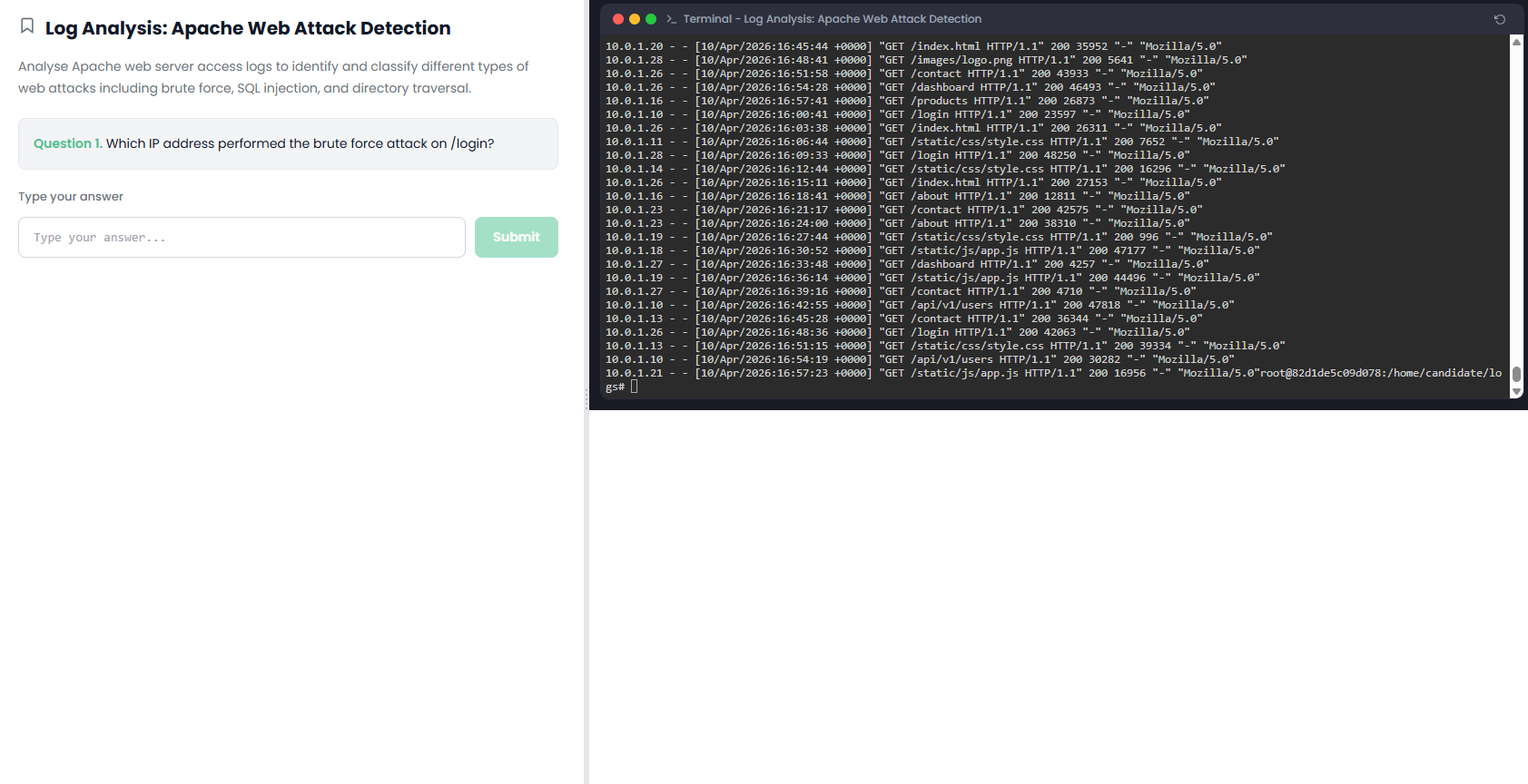
For the full method, including how to build decoys and calibrate difficulty, see our guide to the technical assessment for SOC analyst candidates.
Where do good SOC analysts come from?
- Tier 1: career changers from IT support, networking and help desk roles, graduates, and people who have taught themselves through home labs. Many will not have certifications, and do not need them if they pass a practical test.
- Tier 2: strong Tier 1 analysts ready to step up, often from MSSPs, where they have seen a wide range of environments.
- Tier 3: experienced Tier 2 analysts, detection engineers and incident responders. Promoting from within is often the best route, because they already know your environment.
A hands-on test helps most at Tier 1, where it lets you hire on ability rather than on a CV that may be thin.
What should you ask in a SOC analyst interview?
With test results in hand, use the interview for what the test cannot show: how they reason, when they escalate, and how they communicate. Walk through their test answers, ask scenario questions matched to the tier, and ask every candidate the same questions. For a full set with strong answers and a tier table, see these SOC analyst interview questions.
What are the common mistakes when hiring a SOC analyst?
| Mistake | What happens | What to do instead |
|---|---|---|
| Testing Tier 1 candidates against a Tier 3 bar | Everyone fails and the market looks empty | Calibrate the test to day-one tasks for the tier |
| Requiring certifications for Tier 1 | Removes capable career changers | Test the skill directly |
| Asking trivia in interviews | Rewards rehearsal over ability | Use scenarios and review their work |
| Ignoring shift patterns and on-call | Strong hires leave in the first months | Be clear about shifts in the advert |
| A slow process | Good analysts accept other offers first | Set the timeline before the first interview |
Frequently asked questions
What is the difference between Tier 1, Tier 2 and Tier 3 SOC analysts?
Tier 1 analysts monitor and triage alerts and escalate the suspicious ones. Tier 2 analysts investigate escalated alerts and contain incidents. Tier 3 analysts hunt for threats, tune detections and handle the most complex investigations.
Do SOC analysts need certifications?
Not necessarily. Certifications show study, which is useful, but they do not show whether someone can triage an alert. A short practical test tells you more, especially for Tier 1, where many strong candidates are career changers.
How long does it take to hire a SOC analyst?
It depends on the market and your process, but the biggest delays are usually internal: slow CV sifts and long gaps between stages. Testing first and deciding quickly shortens the process and keeps strong candidates engaged.
Should I hire a Tier 1 analyst and train them up?
Often, yes. A Tier 1 hire with strong fundamentals, confirmed by a practical test, can grow into a Tier 2 analyst who already knows your environment. That is usually easier than finding an experienced Tier 2 analyst in a tight market.
How CyberHire helps you hire SOC analysts
CyberHire is cyber technical screening for exactly this. Pick the ready-made SOC analyst assessment, calibrated to Tier 1, 2 or 3, or paste your job specification and generate one. Candidates work in real environments: KQL hunting in a Sentinel-style workspace, Windows event logs, phishing emails with full headers, and raw logs in a live shell.
Every candidate is scored the same way, with integrity signals next to each score, and you see what to probe in the interview. See what candidates do in the SOC analyst skills test, or read the wider guide on how to hire a cyber security analyst. If you would rather not build the assessment yourself, our team will build it with you.
Hiring a SOC analyst?
Get a SOC assessment calibrated to the tier you're hiring.
Send us the job spec. Within 48 hours we send you a hands-on SOC assessment built around it, in your branding, free. Tier 1, 2 or 3, scored the same way for every candidate.